
restoring our trailer mast
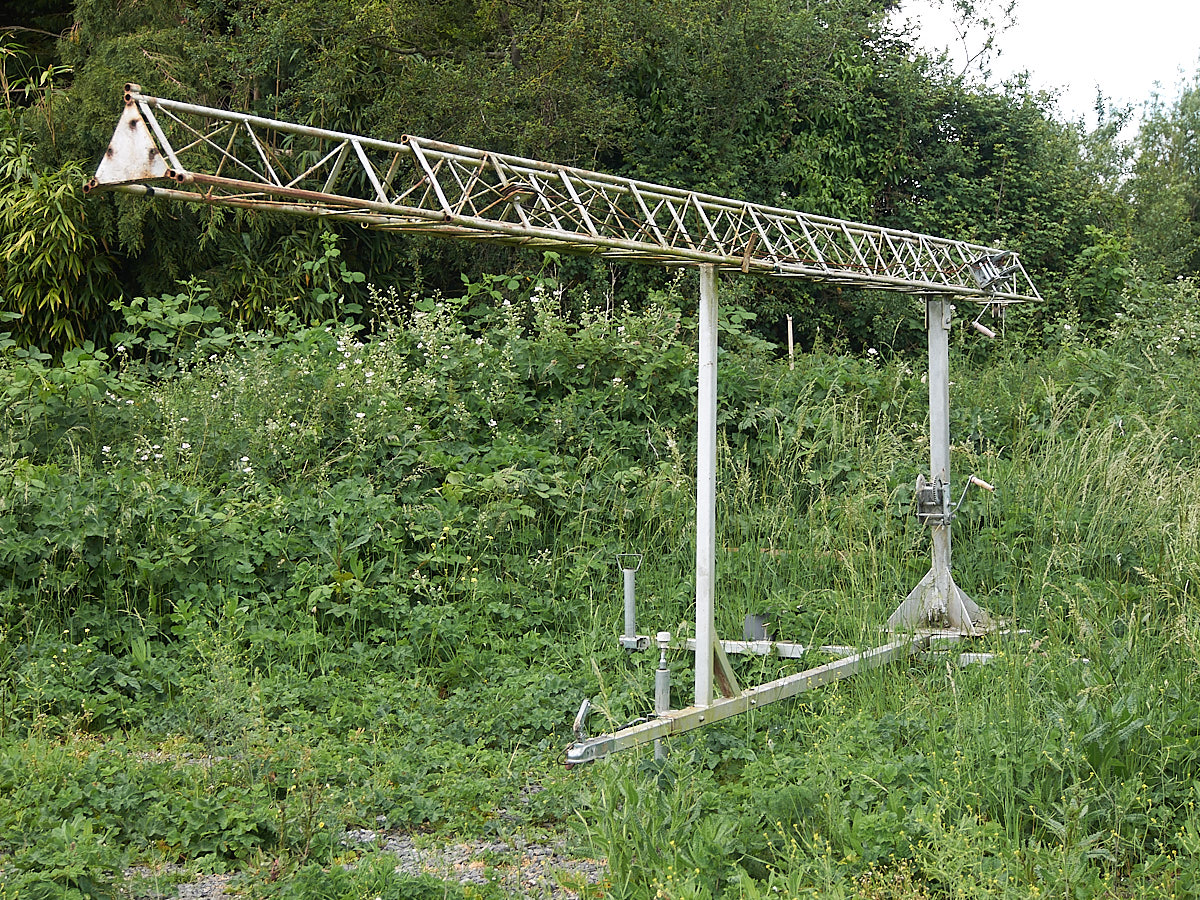
Some time ago Matt M9MIM obtained secondhand a trailer mast, a two-section telescopic steel lattice tower carried on a square section tubular steel trailer, which uses winches and cables made of steel wire rope to tilt the whole mast into or from the vertical (known as luffing) and to wind up the inner section only, to obtain maximum height (lifting).
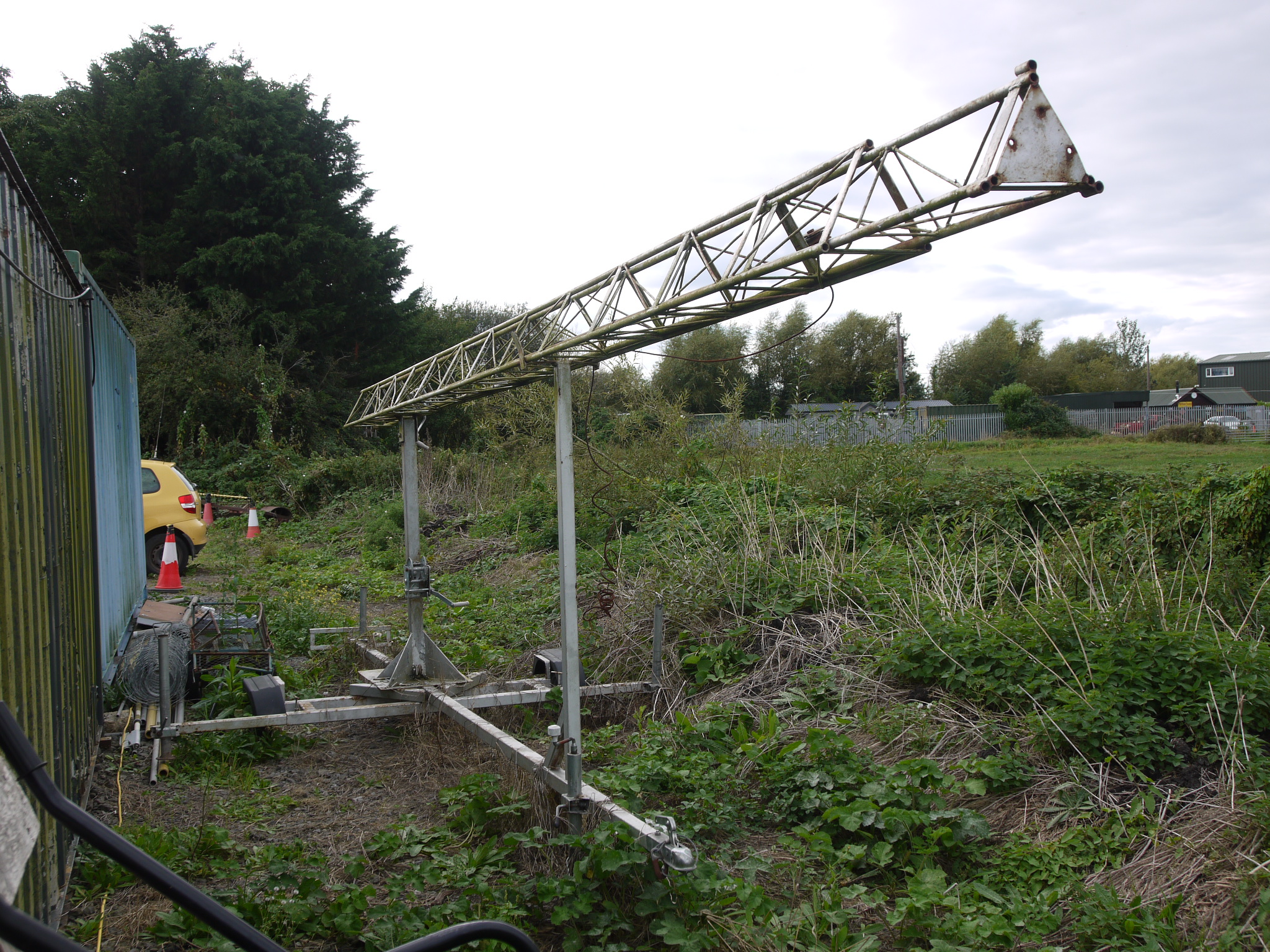
These masts are very desirable and sought after among radio amateurs, the plain fixed kind being fabulously costly and the road-going kind even more so but also even more desirable as unlike the fixed kind they are ‘temporary structures’ and can be moved from place to place and used from time to time without having to have planning permission.
This one was certainly not in the first flush of youth when it arrived but provided some good service holding up a huge scaffold tubing crossbar which supported two very large verticals, a 2m/70cm collinear and a 27MHz 5/8 wave, now each on its own scaffold tubing mast.
It seems that at some point the mast had received new winches but alas their cables were evidently not up to British Standard, indeed their remains suggest that they were not even up to Chinese export standard.
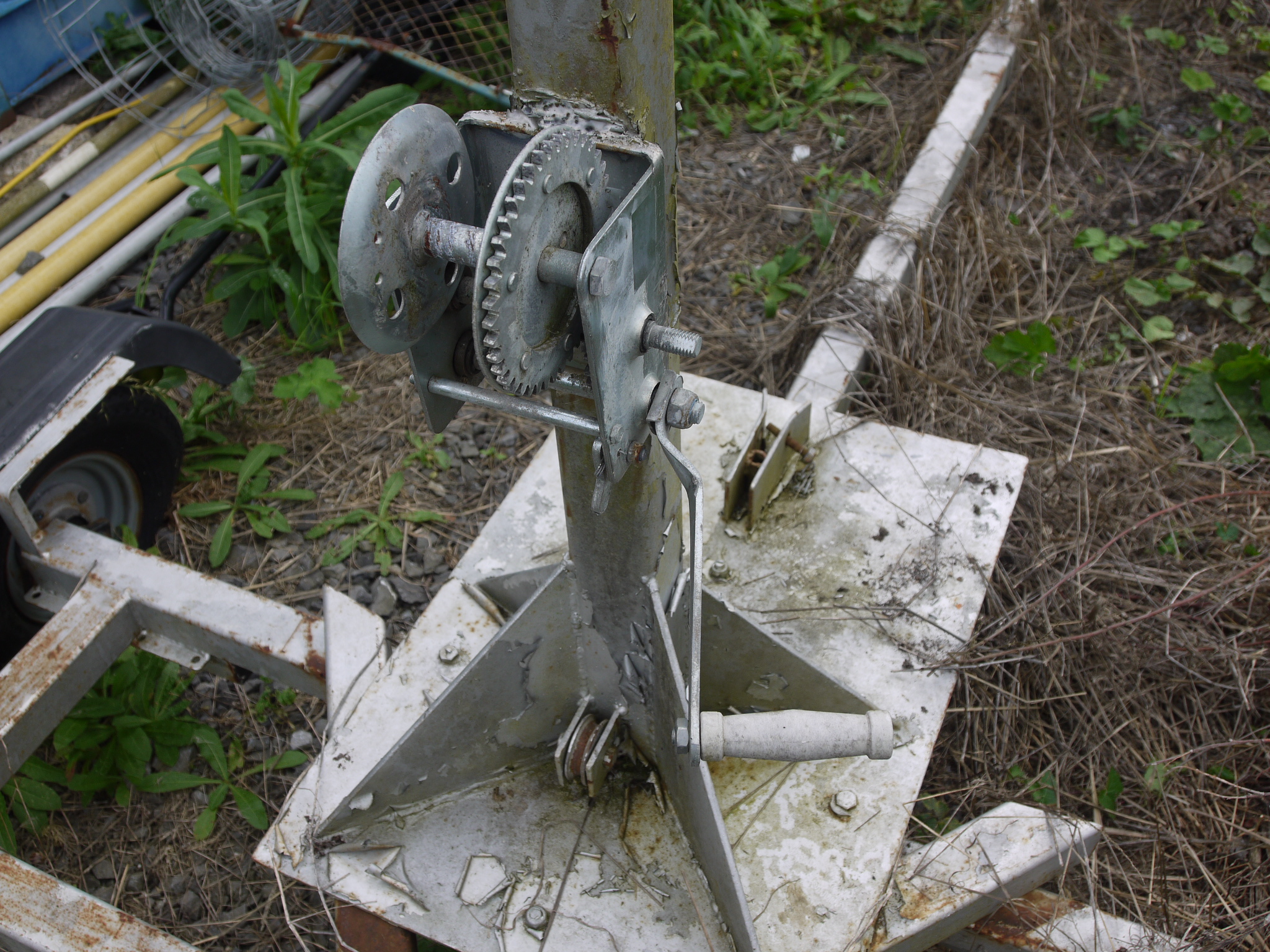
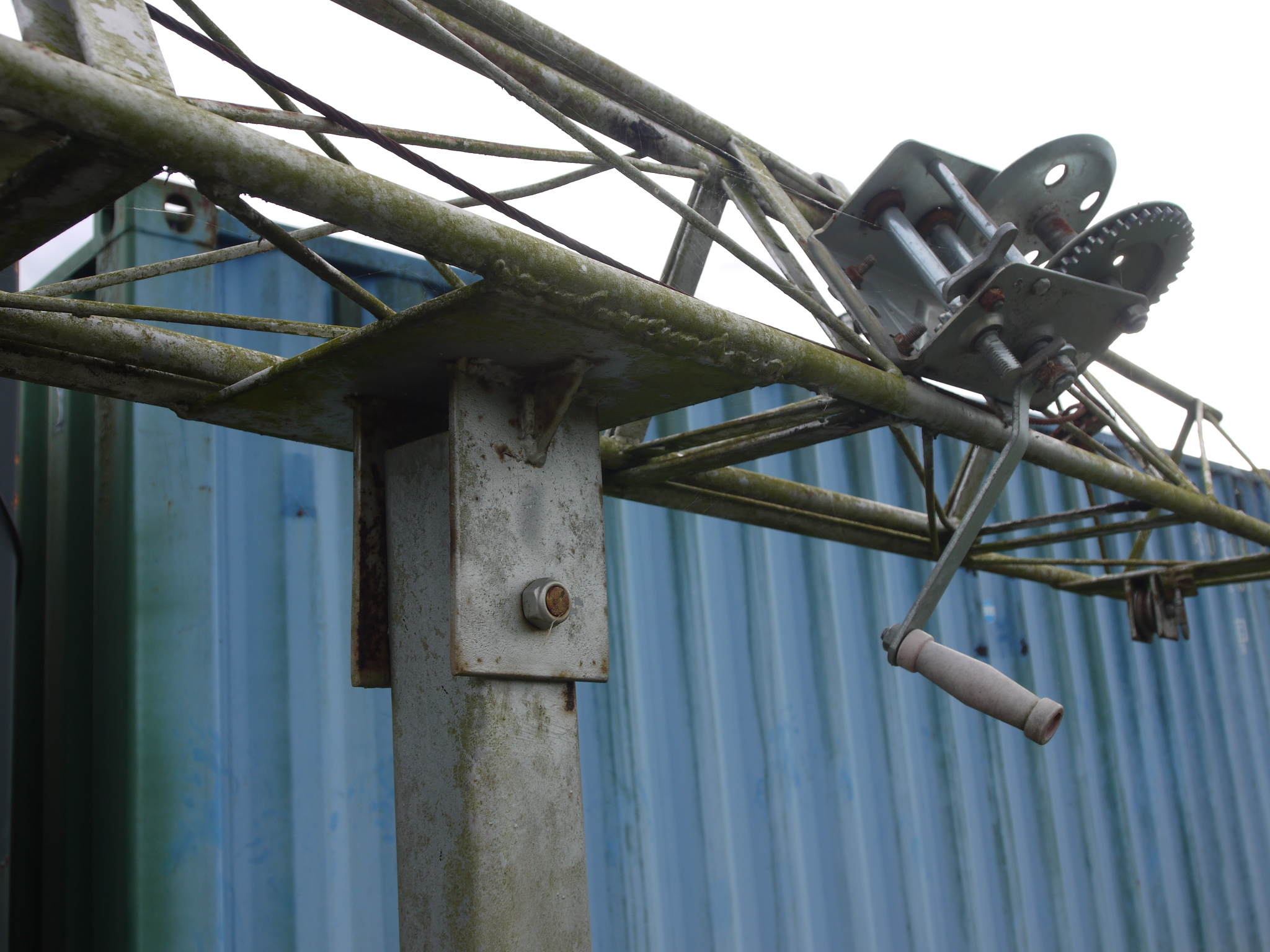
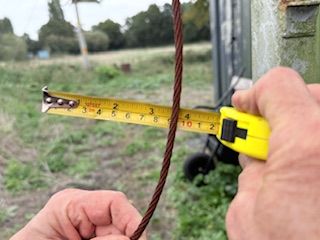
M9MIM having spotted the rapid degradation of these safety-critical components quickly took the mast out of service and it has remained as a distinctive feature of the car park ever since.
A few months ago Chaz G6UVO took away the top section of the mast, which is a tetrahedral rotator cage of the usual design, and tried restoring it as a pattern for the rest of the mast. Having had its slightly bent fittings straightened it was stripped and repainted with high grade marine type primer and finished using Montana 94 Maya Green, which is an outdoor art paint of a similar colour to the green used by the USAAC during WWII, giving a subdued and discreet appearance.
The new Yaesu G-450 rotator was fitted to its mounting plate and a stub mast cut from aluminium tubing to pass from its upper clamp through the upper bearing at the top of the tetrahedron.
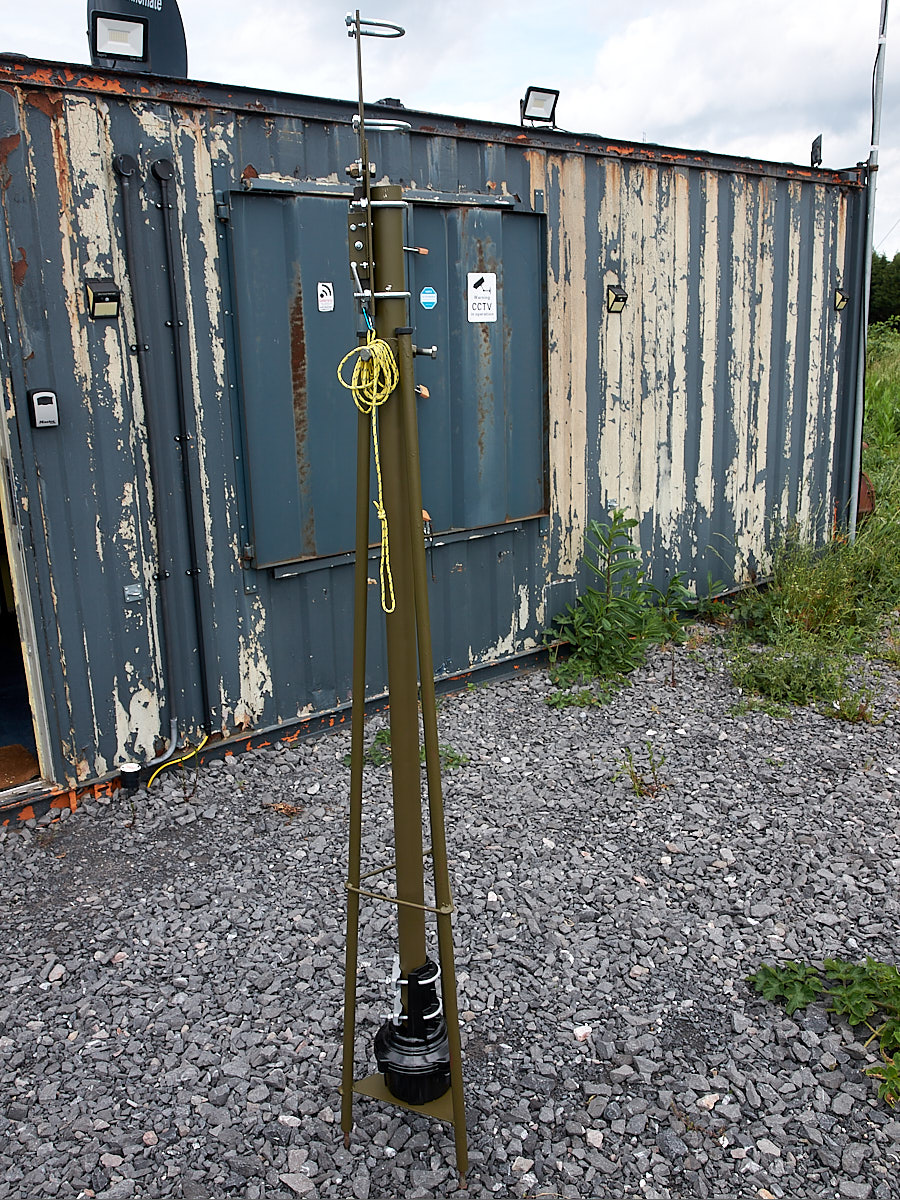
On top of this stub mast is a tiltover device made by hand from steel strip, oddments of scrap and a few new parts. The purpose of this is to allow the antenna supported by the mast, a very large Spiderbeam HD type, to tilt through rather more than 90 degrees as the mast luffs down, preventing the antenna from striking the ground and allowing it to sit neatly on top of the luffed-down mast so that with luck one could walk or drive a car beneath it.
This curious looking assembly has been in stores for some time because we have been too busy with other things.
However as we cannot operate at present except /M or /P, time now presents itself in which something can be done about the mast.
First we cast about for a local supplier of certified winch cables to ensure that we could actually obtain them.
As soon as it became clear to this large professional firm in Highbridge, a few miles away, that we the Club had among us not a single mechanical engineer able to calculate the load on the luff cable (the lift one is easy, it is the weight of the top section plus the weight of the cable used to lift it, but the luff load changes dynamically as the mast tilts over, reaching a maximum just before it lands, and its calculation is not within the curriculum of the RAE) they became very supportive and started asking all sorts of kindly questions to which we could at the time provide rather few answers. However it was clear that though they might turn out to be expensive (what doesn’t?) they will not let us order the wrong things.
Having first taken some photos and measurements we (that is the mast work party consisting as usual of M9MIM, G6UVO and Petra M7PAH) set about it. Industrial safety enthusiast G6UVO insisted that everyone wear safety glasses when dealing with steel wire rope and plastic safety helmets at all times. Having imposed this regime with merciless harshness he then stood up underneath the mast, his own plastic hat making a very satisfactory exotic percussion type sound effect.
We quickly found that the mast could not be dismantled as the two sections were firmly stuck together with for some reason the top section extended by about 400mm. The seizure turned out to be due to the broken and slack lift cable having become snagged between the two mast sections in several places. Once most of the cable was cut away with bolt cutters it was found that by levering the two mast sections apart with a large screwdriver the cut fragments of cable could be released and the two sections separated.
Before the inner section of the mast could be removed it was necessary to drop the hitch end of the trailer as far as possible to bring it within reach. Initially by levering and then by main force the top section was dragged out and in a three-handed lift placed neatly on the ground beside the trailer.
The lower section was held in a large clevis at the top of the trailer’s centre post by a length of studding with a 24mmAF Nyloc nut at each end, acting as a pivot. When this was removed the lower section was lifted clear and placed alongside the upper.
Concrete blocks were positioned to support the mast sections while they are repainted and the trailer was partly dismantled, its outriggers and chassis extension being removed, before being dragged out on its flat tyres to be lifted onto concrete blocks of its own.
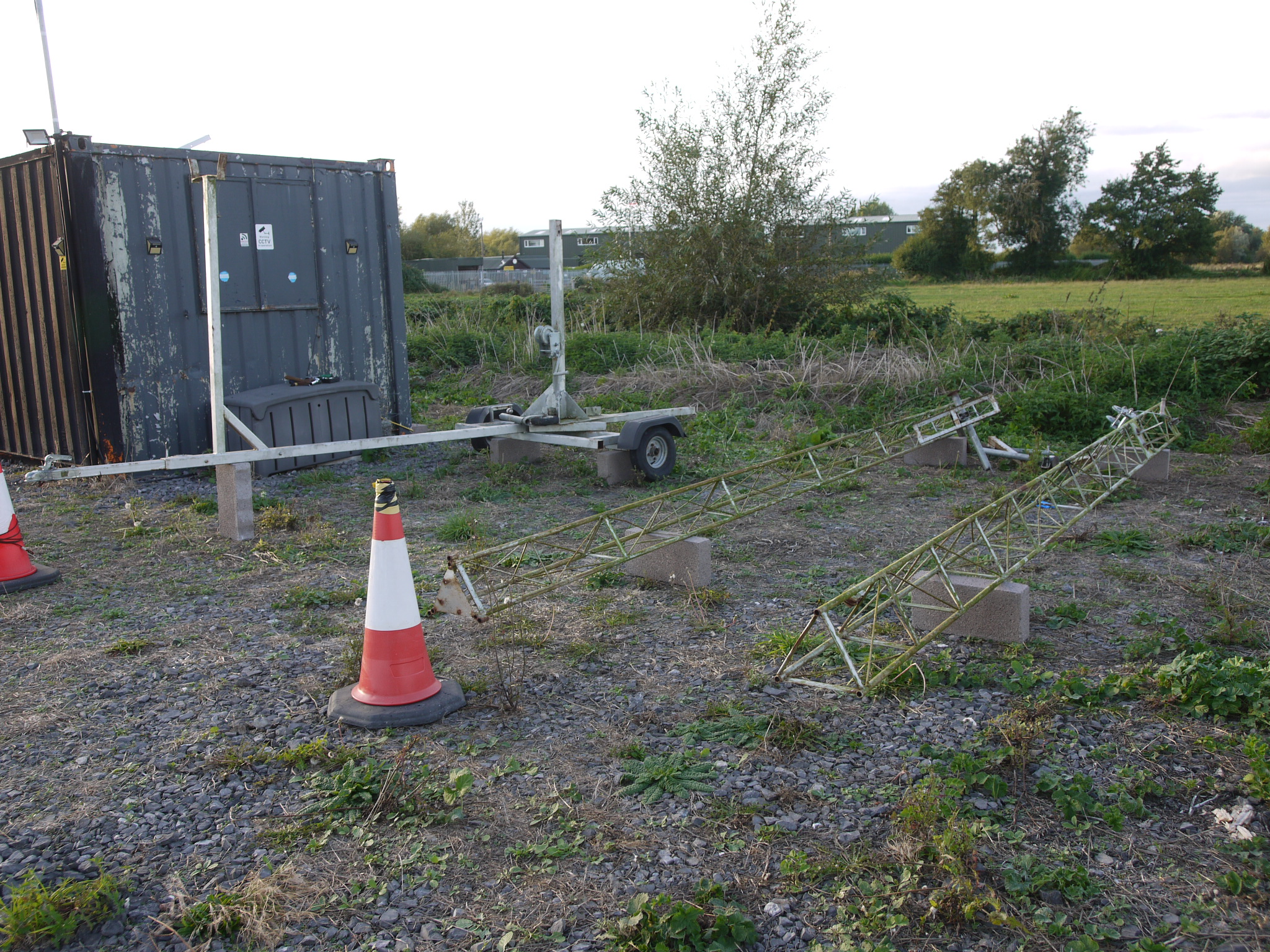
On close inspection of the chassis it became clear that the mast was originally designed for fixed mounting as it has a large baseplate which has been bolted to the trailer, which might be hand-made. The diagonal supports at the corners of the baseplate were found to be loose, held only by friction, which supports the hand-made theory and will have to be fixed.
At this point it started to get dark, as it does now that the equinox is past, and operations were suspended until next time.