
uPVC window cable
Getting your antenna cable into the shack is a perennial problem for the radio amateur. This is about a surprisingly cheap and easy solution for uPVC double glazed windows, which seem to be the most common type in Glastonbury, and probably the UK all round.
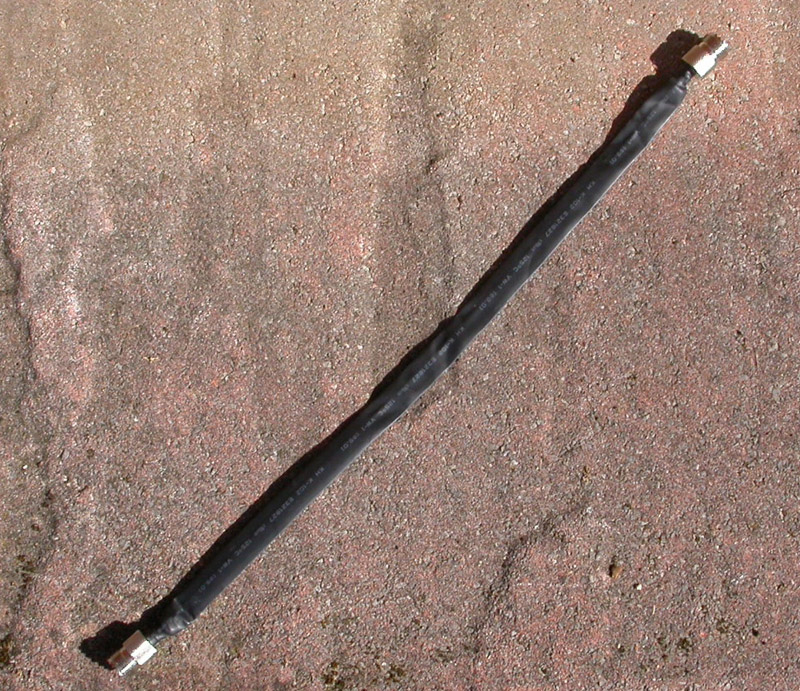
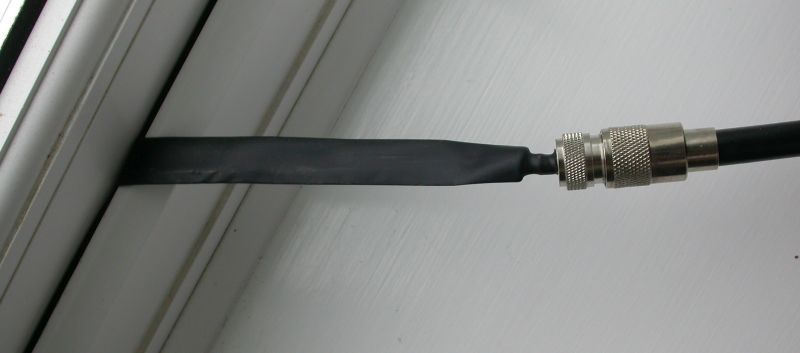
Window cables with a SO239 on either end are widely available on ebay and similar auction sites. I must admit that when I saw Chinese window cables, typically a flat piece of heatshrink with a PL259 at either end about two feet long, I cynically thought from the picture they were using a piece of balanced line. I imagined they relied on the section being rather less than a tenth of a wavelength at HF.
I was wrong, this is a single piece of coax by the feel of it and the flat heatshrink is to minimise chafing, which is surprisingly effective. At a guess the cable is RG174 which has a loss of ~ 32dB/100m at 100MHz and 70dB/100m at 400MHz so you don’t want too much of that, but for a 60cm piece that’s 0.2dB loss at 2m and 0.42dB at 70cm.
Loss will be a lot lower at HF. The voltage rating of RG174 is 1100V so at a typical 50 ohm system impedance and 70Vrms or about 100V pk with a 100W transceiver this is OK for HF and tolerable with a SWR of 3:1 max. Note the power rating is only 30W at 2m, 150 on HF1.
other methods
Some intrepid people drill holes through the wall of their houses, install plastic ductng and terminate their antenna connections on a patch panels. Others sneak their cables up and out past the eaves of the house. My old RSGB Radio Communication Handbook from 1990 first edition sometime in the 1970s showed that previous generations of radio amateurs suffered for their art.
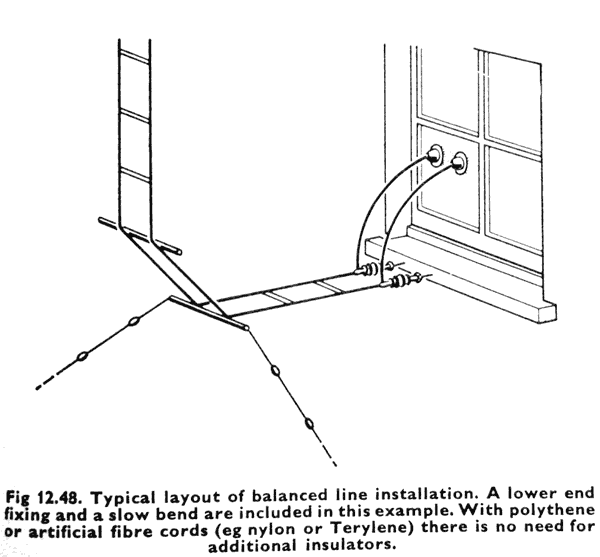
The text exhorts radio amateurs of the bodgit and scarper school not to replace the glass with perspex - open wire lines can tolerate high SWRs with a corresponingly high voltage
replacement of glass by perspex for easier drilling is inadvisable as perspex is frequently subject to rf breakdown
In summer you can just open a window or a window flap and run the cable through that, but that’s not attractive in midwinter, and compromises security. This article is specifically about uPVC windows, which are a very common choice for doubled glazed windows. If you have wooden windows sometimes you can drill the frame.
uPVC
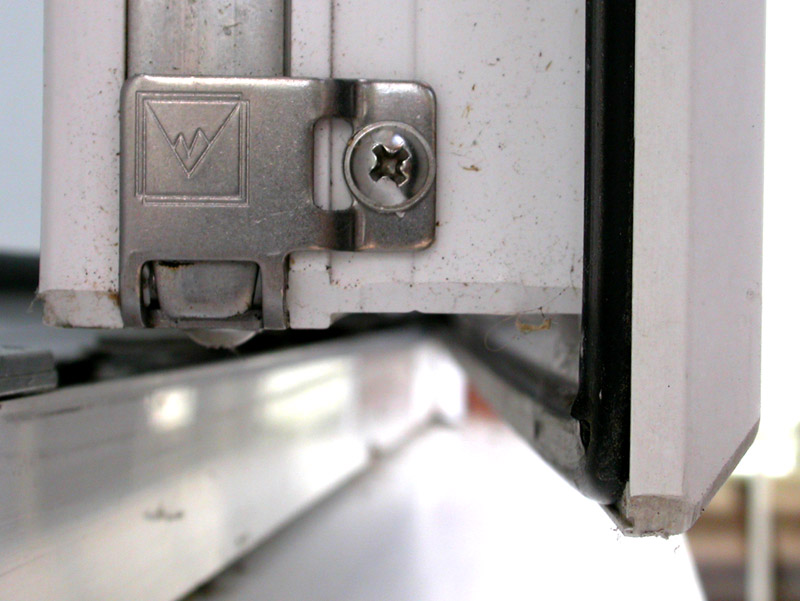
uPVC has a very high2 coefficient of thermal expansion. This means is that uPVC windows have large expansion gaps, if you inspect the frames carefully you will see that the seals are made using rubber strips closing flush with the vertical surfaces, which permits the window unit to expand and contract in the frame. A window can easily be 1m high, so you need to allow for more than 3mm expansion.
| Material | Coefficient of Linear Expansion (mm/m/°C) | Expansion of 5m Length Over 55°C Range |
|---|---|---|
| PVC-U | 0.06 | 16.5mm |
| Aluminium | 0.023 | 6.3mm |
| Steel | 0.011 | 3.0mm |
| Timber (along grain) | 0.003–0.005 | 0.8–1.4mm |
What this means in practice is you can usually sneak something like RG174 cable of about 3mm diameter through the frame, and the seals usually accommodate this. You would be wise to think about the natural flow of water when it rains, in the windows I have seen take your cable out through the bottom of the window, not at the top when rain running down the cable may find its way in.
how well does it perform?
I measured the SWR on a 50 ohm term with and without the window cable, and then the SWR with and without on the station 2m antenna, a Diamond X30.
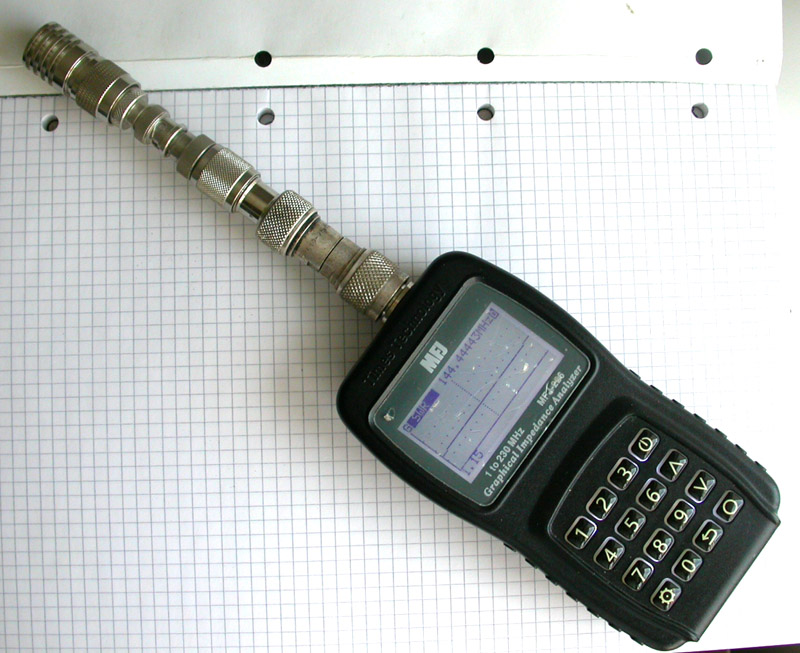
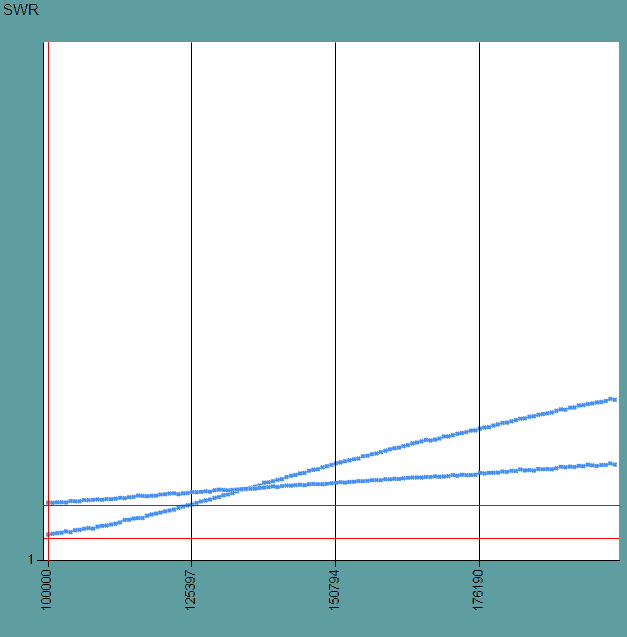
The SWR through the barrel, not the cable is 1.17 at ~145.5MHz. Via the cable it is 1.21 at the same frequency.
Next I tried this on the station 2m X30 antenna
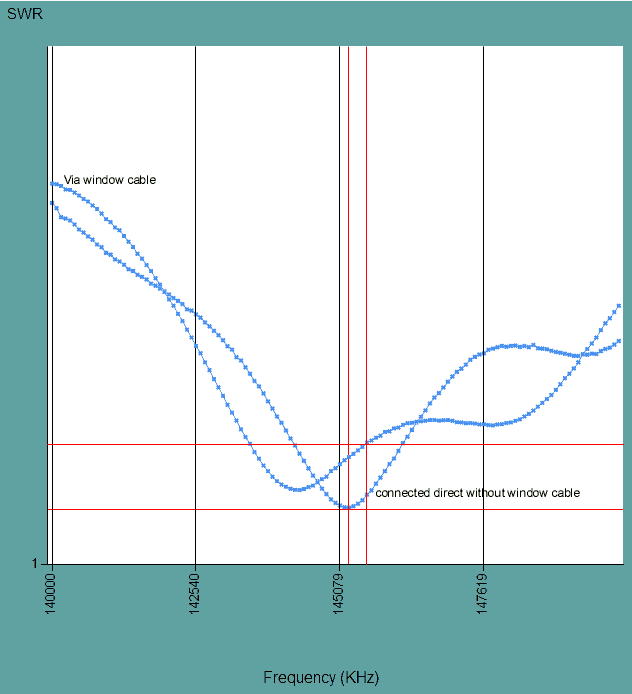
The X30 direct is SWR 1.15 @ 145.5MHz. Via the window cable it is 1.29 at the same frequency. The MFJ 226 doesn’t go above 220MHz so I could not test for 70cm.
Conclusion
In my view this is a convenient and satisfactory solution for getting through uPVC windows without drilling anything, it’s particularly of value for tenants who may not get the okay to drill holes in the property. You have to be careful where you lay the cable to avoid the hinges and struts in the window.
Users should note the power rating is only 30W at 2m, 150 on HF. I use a FT-897 which has a maximum power output of 50W on 2m. In practice on FM if it doesn’t get through with 25W it ain’t gonna happen so I can live with this limitation. It’s a reasonable price to pay for being able to stay warm in the house.
I’ve used the example I tested for a few months, so the measurements are on one of these that has been used in the field for a while.
-
Sotabeams 50 Ohm impedance, 150 Watt HF power rating (30 Watts on 2 m) ↩
-
Source https://www.kalsiplastics.co.uk/blog/thermal-expansion-in-pvc-why-expansion-gaps-matter/ ↩