Exercise Blue Ham
We last did Exercise Blue Ham this Spring, we missed one in the summer due to availability of operators over the weekend, it’s good to do this again this Autumn. Another lovely sunny day. We rigged the antenna on Friday evening on club night. We had to lower the antenna in the dark to repair the masthead balun which must have been dropped at some stage causing three out of four solder connections to fail, thankfully the large ferrite core was still intact and the antenna was back in service by Friday night.
John G8VZA did a great job on the operating position on Saturday along with Chaz G6UVO who worked a lot of stations on both days as well as doing logging for other operators.
We contacted over 70 cadet stations over the weekend. We involved our trainee Gary who got several new cadet stations for us
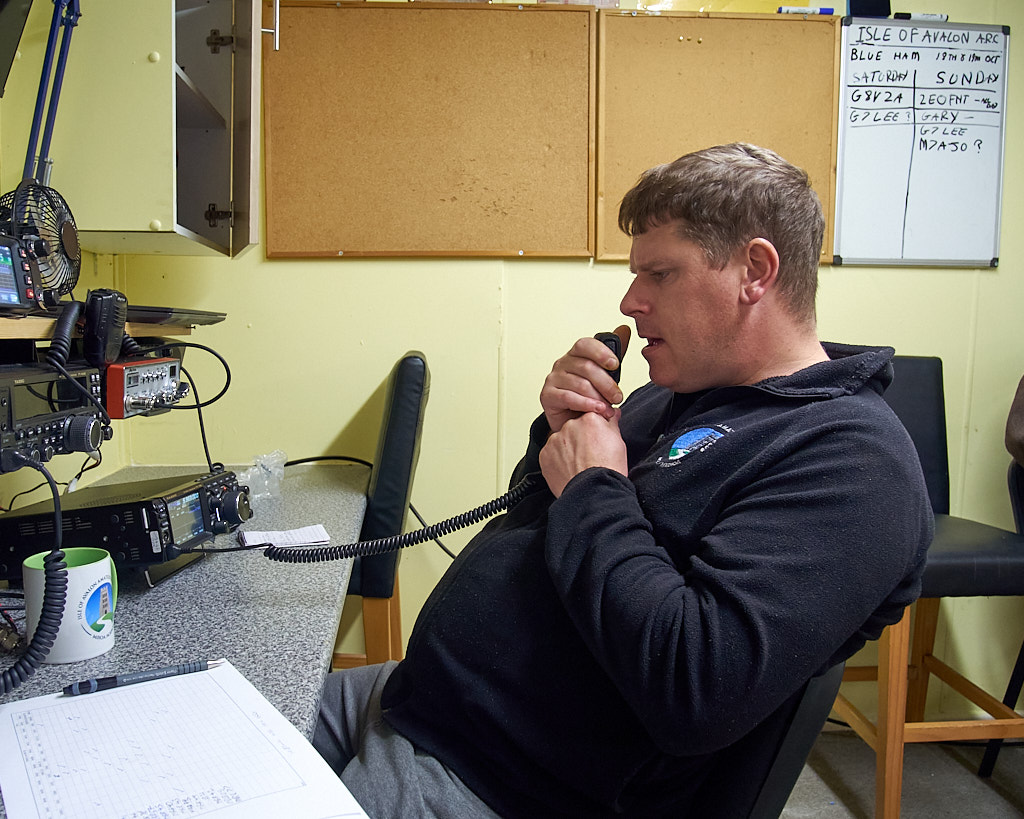
and we put relatively newly licensed Nigel M7IZJ in the hot seat on the Club station and he did very well under pressure garnering three MRE cadet stations with only a few minutes rough outlining of what it’s all about, nice one!
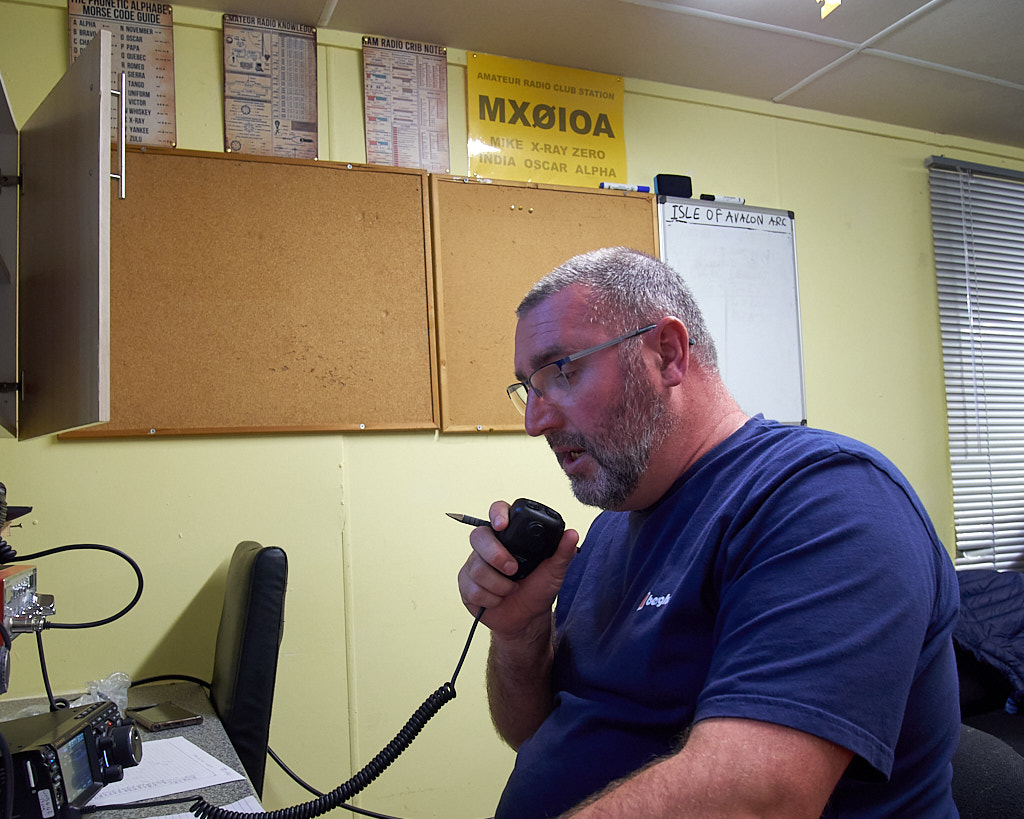
The band was in very good condition for NVIS operation. The cadet stations were using a variety of rigs the Icom IC7300 seemed a clear favourite. Good signals all round, most today were LC (loud and Clear, 59) with good NVIS operation to most of the stations.
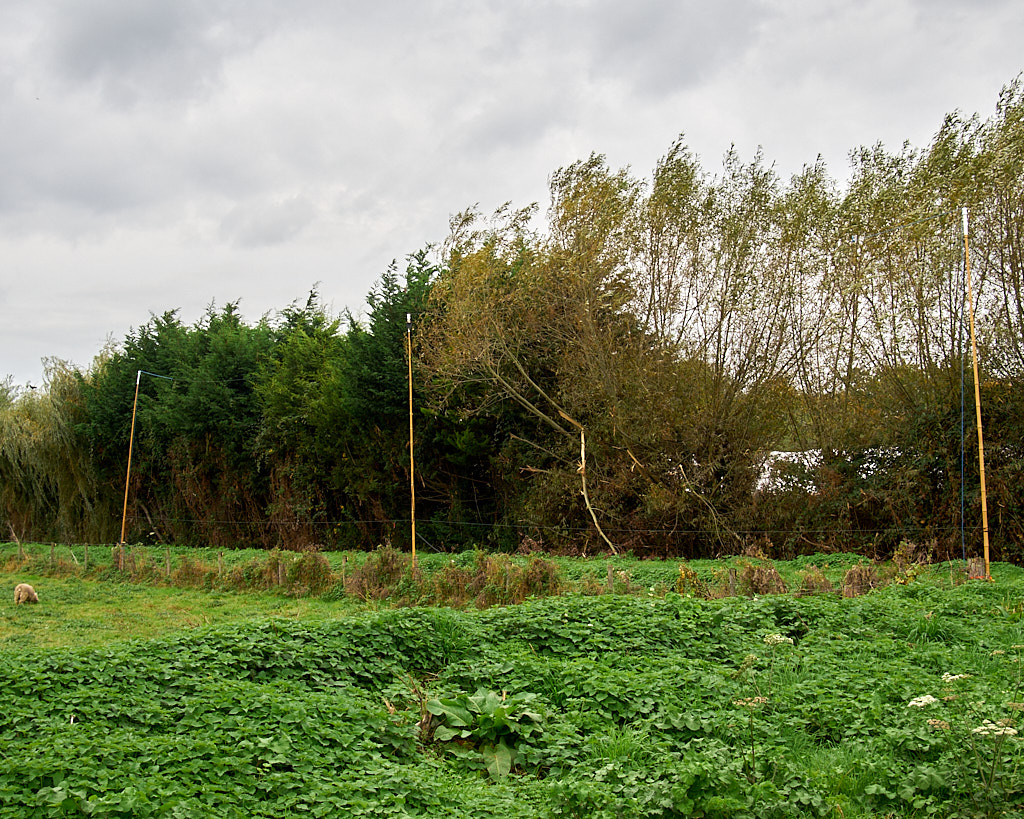
We had an enjoyable weekend contacting cadet stations on the 5MHz band. Well done cadets and RAFAC for putting the show on. Congratulations SOTA operator M1EYP/P who was out in the wet weather on Sunday activating a summit, we gave him a shout and he worked quite a few Cadet stations too. The cadets worked at least on DL station and a few PA stations, nice to get a taste of international working.
notes on the cadets’ stations
RAFAC’s cadets were using more recent rigs than in previous exercises, the IC7300 ws the most common rig used, followed by a few Yaesu FT10DX rigs. The oldest rig I noted was a IC706, There weren’t any Clansmans in use that we noted, there had been one in service in 2022.
The band was in very good condition on Saturday and reasonably good on Sunday, tending to fade with increasing QSB around 4pm BST.
Antennas were a combination of horizontal dipoles and G5RVs in the main, with a few doublets, end-fed half-waves and longwires. One station used a horizontal loop antenna (not a mag loop) and on Sunday there was a mag loop in service in Wales.
One unusual antenna was in the east of the country, an EFSW. End-fed short wire, 20m long and about 2m above the ground1. The low EFSW is reminiscent of the philosophy behind this article by VE2DPE. Although he is using a loaded dipole, he says the effect of the low height about ground improves the SNR for NVIS signals specifically, at the cost of lower signal strength on receive, and more ground losses on TX.
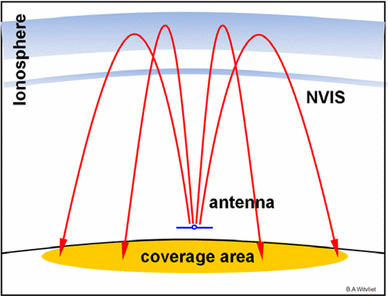
NVIS propagation uses the F-layer that can be up to 300km high so round-trip path lengths are < ~1000km. VE2DPE’s thesis is that extra ground losses are tolerable - losses on RX are made up due to the high background noise at HF, so the noise figure is not impaired by a less sensitive antenna with gain made up with a preamp. Higher ground losses on TX are acceptable due to the modest path length, this is not DX. We worked this station which was in the east of the country repeatedly so the 20m EFSW was quite serviceable in this use case
We observed no particular different signal strengths in cadet stations usng horizontal dipoles orientated in a different direction to our NVIS dipole which was rigged broadly N/S.
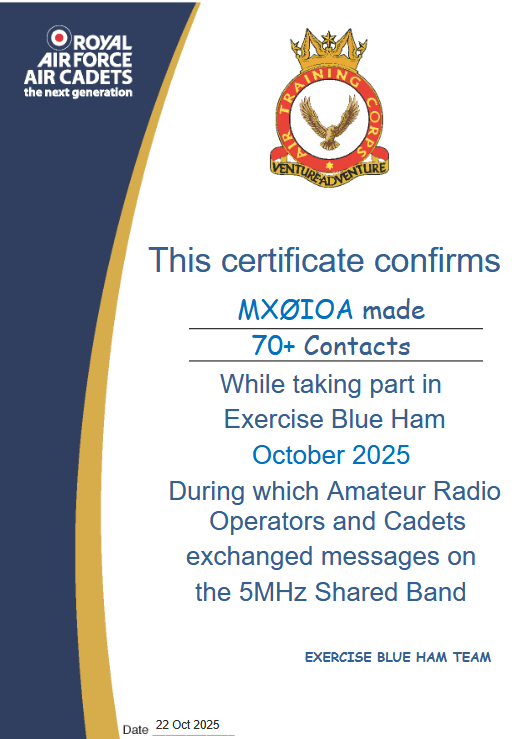
Exercise Blue Ham certificate
Near Vertical Incidence Skywave (NVIS)
The RSGB highlights this paper showing the principles
NVIS propagation may be used to cover an area with a 200 km radius using low power and simple antennas […] a modest transmit power of 20 W in a dipole antenna will produce more than 30 dB signal-to-noise ratio (SNR) in a 3 kHz bandwidth. […] This SNR is constant over the entire coverage area and does not decay with increasing distance.
More about NVIS on wikipedia
about Exercise Blue Ham
Blue Ham exercises provide a platform to further develop Cadet radio operator skill and confidence by engaging with the Amateur radio community via the MOD 5MHz (Shared) Band. More from RAFAC, and there is a log page2 and map of stations